The companies are constantly switching to eco-friendly packaging materials because in the modern market, health and sustainability are the primary concerns of the buyer. To stand out in the competitive world and gain popularity among buyers, businesses need to understand the various environmentally friendly options.
This guide will help you understand the various sustainable materials for food packaging. Besides that, it will also talk about the advantages of going green and how Bagla Group is at the forefront in providing the best packaging material.
Understanding Sustainable Food Packaging
Sustainable food packaging means the use of packaging materials that will have a lower environmental impact throughout the whole life cycle of a package. The primary objective of sustainable food packaging is to cut down carbon emissions, utilize resources that can be effortlessly reproduced, and produce designs that can either be recycled or composted.
Top Sustainable Materials For Food Packaging
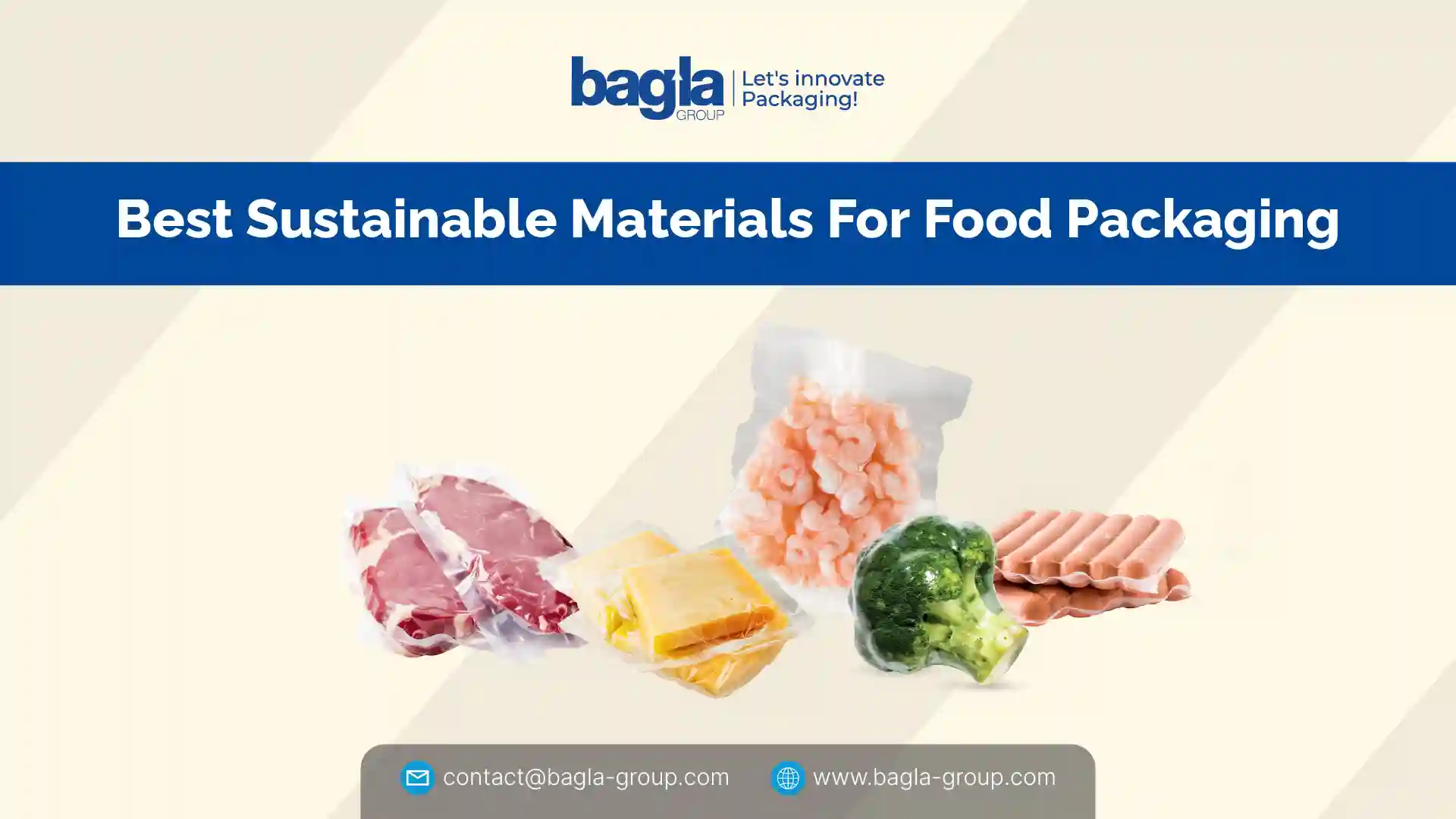
Utilizing sustainable materials for food packaging has not only reduced the impact caused by packaging waste but also safeguarded the environment. Here are some of the best sustainable food packaging options available:
Paper and Cardboard
Both paper and cardboard can be recycled or turned into compost. They are the main materials in packing dry food, takeaway food, etc. The recycling programs and the Forest Stewardship Council (FSC) are the certifiers of paper and cardboard.
Biodegradable and Compostable Films
Bioplastics made from corn, sugarcane, and other plants are available for composting and hence can be used as a replacement for traditional plastics. These materials are an alternative to traditional plastics, strong while breaking down naturally under composting conditions. One of the best examples of these bioplastics is PLA (Polylactic Acid) & PHA (Polyhydroxyalkanoates). It works to reduce dependency on fossil fuels, compostable in industrial facilities, & maintain the food safety and shelf life.
Glass
Glass is the ideal 100% recyclable and reusable packaging; furthermore, its shelf life can be extended several times through use. Glass jars are not only for food and drinks, but they are also endless in freshness.
Metal (Aluminum and Tin)
Metals can be recycled indefinitely, and their contents never get exposed to light, air, or moisture that can cause spoilage.
Plant Fibers (e.g., Bamboo, Bagasse, and Palm Leaves)
Composting, renewable resources, and production of plates, trays, and food containers are all for the purposes of plant fibers like bamboo, bagasse, and palm leaves.
Advantages of Using Sustainable Materials for Food Packaging
Switching to sustainable materials for food packaging is a journey that influences the environment and the companies involved significantly. The following are the most important benefits of this transition, which are succinctly outlined.
- Sustainability: The employment of recyclable or biodegradable materials is a lessening factor, and thus their use can be seen as a “cleaning” of the pollution, waste, and carbon emissions to a certain level.
- Natural resources saving: The transition from virgin to recycled fibers is heading towards the utilization of eco-friendly materials like plants and bamboo instead of plastics that are being exhausted.
- Brand Image Enhancement: It gives out the company’s loyalty to the environment in a very attractive manner to the green-minded customers, thus creating a bond of trust between the brand and customers.
- Non-Toxic: Production and even direct food contact are safe, and say that natural materials that are not toxic are used.
- Circular Economy Support: The practices of recycling and reusing are reinforced, which results in less waste going to landfills and supports the production processes that are ethically conducted.
- Conformity to Standards: Providing the companies with the necessary tools to be able to comply with the worldwide environmental and packaging standards.
Why Sustainable Materials For Food Packaging Matter?
Environmentally sustainable materials are the basic needs for the development of a packaging industry. The adoption of these materials not only mitigates the volume of plastic waste but also minimizes the carbon footprint and the environmental impact in general. These materials are safe for food contact, are non-toxic, and help in maintaining the quality of the products. Moreover, the increasing trend of consumers opting for sustainable brands has compelled companies to go for green packaging, which in turn generates customer trust and brand loyalty.
Why Choose Bagla Group for Sustainable Packaging Solutions?
When selecting a partner for your sustainable packaging transition, Bagla Group delivers not just products but a forward-thinking commitment to green innovation.
- Recyclable Films Expertise: Bagla Group has become one of the top global suppliers of POF shrink films while offering eco-friendly packaging, and in addition, has such films. The development of these films has taken into consideration their performance, safety, and the fact that they meet global recycling standards.
- Eco-Friendly Manufacturing: Bagla Group’s Team works at the Group concentrates its efforts on processes that consume less energy and on trying to eliminate any plastic waste that might come as a result of the production process.
- Global Expansion with a Sustainable Focus: The Bagla Group, with a new and modern manufacturing facility planted in Paraguay and Indonesia, is slowly but surely expanding, giving rise to local economies and also carbon footprints through more efficient supply chains that are less critical.
- Custom Packaging Solutions: The company, irrespective of the area of application, i.e., food, FMCG, industrial, or pharmaceuticals, is able to produce films that are made from recyclable materials and are perfect for the product and shelf-life requirements.
- Strong Compliance & Global Trust: Bagla Group Films are meeting the requirements set by the RecyClass, CEFLEX, and EPR, thus reassuring that your packaging would pass the toughest global scrutiny.
Conclusion
Sustainable Materials for Food Packaging will surely dominate the food industry in the future since the whole world is turning towards greener options. Compostable bioplastics, along with bamboo, paper, and bagasse fibers, are helping to save the planet and providing profits to the companies and the consumers as well.
Switching to eco-friendly packaging can result in a significant reduction of waste, a better brand image, and the company will be part of a sustainable environment.
The Bagla Group’s green film solutions are both technologically advanced and responsible. If your brand is ready to go eco-friendly, then they are the perfect choice for you.