As the environmental pollution caused by plastic waste on a global scale is getting to alarming levels, companies are being forced to re-examine their packaging strategies beyond what goes inside the box.
Eco-friendly packing has become essential for businesses rather than just a buzzword. Customers have become environmentally aware. Governments are making strict policies. The Earth is tired.
So, what does it mean to use sustainable packaging? And how are recyclable films changing the packaging industry?
Here you will get answers to all your questions. This article explains sustainable packaging, its different types, advantages, challenges, and innovations introduced by companies such as Bagla Group.
What Is Sustainable Packaging?
Sustainable packaging refers to packaging that minimizes environmental impact across its entire lifecycle — from raw material sourcing and production all the way through consumer use and end-of-life disposal. According to the Sustainable Packaging Coalition, sustainable packaging must be:
- Made from renewable, recycled, or biodegradable materials
- Designed for reuse, recyclability, or compostability
- Produced using clean manufacturing technologies
- Optimized to minimize material, energy, and water waste
Did you know? The global sustainable packaging market was valued at approximately USD 304 billion in 2023 and is projected to exceed USD 560 billion by 2032, growing at a CAGR of over 7% (Source: Grand View Research). The shift is already underway.
Why Sustainable Packaging Matters More Than Ever?
The environmental cost of conventional packaging is staggering:
- Over 141 million metric tons of plastic packaging are produced each year (UNEP) globally.
- Only about 9% of all plastic ever produced has been recycled (Science Advances).
- Flexible plastic packaging is among the hardest materials to recover through standard recycling systems.
Brands ignoring this reality risk more than fines — they risk losing customers. A 2023 McKinsey study found that 60–70% of consumers factor environmental impact into their purchasing decisions.
Role of Recyclable Film Technologies in Sustainable Packaging
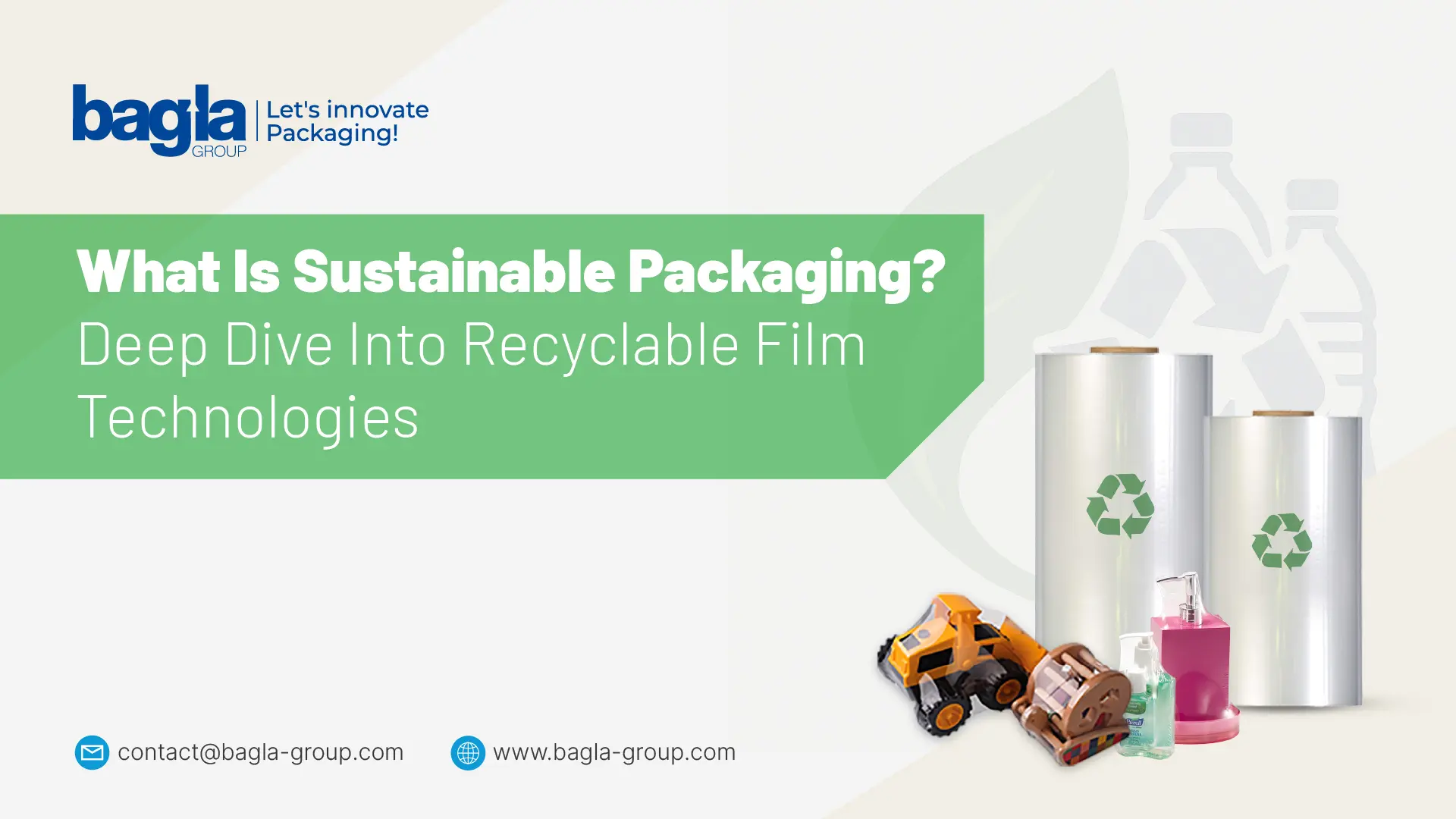
The recyclable film technologies are the most impactful innovation in sustainable packaging. These films are designed to reduce plastic waste and maintain durability, barrier protection, and shelf appeal required in modern packaging. Recyclable films are widely used in flexible packaging for industries such as food, personal care, pharmaceuticals, and industrial sectors.
Types of Recyclable Packaging Films
To innovate the sustainable packaging for a safe surrounding and a healthy environment, industries can simply choose recyclable packaging films as follows:
1. Mono-Material Polyethylene (PE) Films
These films are made entirely from polyethylene. PE films allow easy recycling without separation. One of the reliable options for the packaging of food pouches, shrink wraps, and liners. The benefits of using these films are Lightweight, compatibility with recycling infrastructure, and high clarity.
2. Polypropylene (PP) Films
PP films are highly recyclable plastics with excellent moisture resistance and rigidity. Compatible for the packaging of Flow wraps, snack packs, and salad trays. The advantages of using these Polypropylene (PP) Films are Heat resistance, high stiffness, and food safety.
3. Paper Laminates with Recyclable Coatings
These films are a combination of papers with barrier layers like EVOH or water-based coatings. You can simply apply these films to dry goods, coffee bags, and tea sachets. The benefits of using these films for sustainable packaging are a compostable paper feel and recyclability in paper streams.
4. Bio-Based and Compostable Films (e.g., PLA)
These bio-based films are derived from natural resources like corn starch or sugarcane. A user can simply implement this on the fresh produce and organic products. The benefits of using these films are industrially compostable and have renewable sourcing.
Note – Not suitable for regular plastic recycling streams.
5 Key Benefits of Recyclable Film Packaging
- Reduced Environmental Impact: Recyclable films lower landfill load, reduce microplastic leakage, and cut CO₂ emissions throughout the supply chain — supporting both corporate sustainability targets and national climate commitments.
- Stronger Brand Trust and Consumer Loyalty: Eco-conscious packaging is a powerful purchase driver. Brands that visibly commit to recyclable packaging earn higher consumer trust and repeat purchase rates.
- Global Regulatory Compliance: EPR frameworks in India, the EU Packaging Regulation, and bans on single-use plastics across Southeast Asia mean recyclable packaging is increasingly a legal requirement — not a differentiator.
- Long-Term Cost Savings: While upfront investment in sustainable packaging may be higher, businesses benefit from reduced waste disposal costs, fewer regulatory penalties, and the commercial upside of a stronger sustainability brand position.
- Supply Chain Resilience: As virgin plastic costs rise with carbon pricing and resource scarcity, recyclable and circular packaging materials help de-risk supply chains.
Why Choose Recyclable Film Technologies?
Recyclable films make sustainable packaging more realistic and scalable for businesses. Here’s how –
- Environmental Impact Reduction: When you use the Recyclable films, they reduce landfill load, microplastic leakage, and CO₂ emissions, contributing to climate goals and a circular economy.
- Consumer Demand & Loyalty: Most of the new buyers in the market prefer eco-friendly packaging. So, when you use these films, they enhance the brand trust and influence purchase decisions.
- Regulatory Compliance: Many countries are now enforcing Extended Producer Responsibility (EPR) and plastic bans. Recyclable packaging ensures you’re compliant globally.
- Cost Savings Over Time: While initial investments may be higher, recyclable packaging leads to long-term savings via reduced waste, fewer penalties, and stronger brand loyalty.
Common Challenges in Recyclable Film Adoption
Despite its benefits, recyclable film packaging presents a few challenges –
- Barrier Performance Limitations – Mono-materials often have lower oxygen/water vapor protection than complex laminates.
- Heat Sealing Variations – Machines might need to be recalibrated for new film thicknesses or materials.
- Limited Collection Infrastructure – In many regions, flexible films are not accepted in curbside recycling.
- Consumer Confusion – Mislabeling or a lack of disposal education can reduce actual recycling rates.
Material Innovations Driving Sustainable Packaging Forward
The packaging industry is investing heavily in R&D to overcome these barriers –
- Sustainable Paper Solutions – Enabling reduced plastic usage with improved strength, printability, and recyclability.
- Water-Based Inks & Adhesives – Reduce contamination during recycling.
- Recyclable Barrier Coatings – Replace aluminum and PVC in traditional laminates.
Why Bagla Group Is the Sustainable Option for You?
When selecting a partner for your sustainable packaging transition, Bagla Group delivers not just products but a forward-thinking commitment to green innovation.
- Expertise in Recyclable Films – Bagla Group is one of the global leaders offering POF shrink films and recyclable packaging options. These films are designed for performance, safety, and compliance with international recycling standards.
- Eco-Friendly Manufacturing – From scratch to final products, the Bagla Group team emphasizes energy-efficient processes and reduces plastic waste.
- Global Expansion with Sustainable Focus – With a new state-of-the-art manufacturing plant in Paraguay, Indonesia, Bagla Group is expanding sustainably, supporting local economies and reducing carbon footprints through optimized supply chains.
- Custom Packaging Solutions – Whether you’re in food, FMCG, industrial, or pharma, Bagla Group develops tailor-made recyclable films that meet your exact product and shelf-life needs.
- Strong Compliance & Global Trust – Bagla Group films are aligned with frameworks, ensuring your packaging stands up to global scrutiny.
Transitioning to Sustainable Packaging – What Brands Should Do
Switching to sustainable packaging isn’t just about changing materials; it’s about shifting mindsets and processes. Here’s a basic roadmap –
- Audit Current Packaging for recyclability, material use, and environmental impact.
- Consult with experts like Bagla Group to identify viable, sustainable alternatives.
- Test packaging prototypes for performance (seal, shelf-life, appeal).
- Label responsibly with clear disposal instructions and recycling logos.
- Educate consumers through campaigns, QR codes, or product stories.
Conclusion
If you are thinking that swapping from plastic to paper is a sustainable packaging option, then you might be wrong. Sustainable packaging requires thoughtful design, material innovation, and partnering with the right manufacturers. You can work with sustainable packaging with recyclable film technologies. These films play a central role, as these brands can reduce environmental harm without compromising on quality or shelf presence.