Food packaging today requires solutions that not only protect products but also maintain freshness, extend shelf life, and provide an attractive presentation. Among the most widely used packaging formats for food products are top and bottom Thermoforming Films. These films play a critical role in thermoforming packaging by creating secure, durable, and visually appealing packs for a wide range of food applications.
Whether it is fresh meat, poultry, seafood, cheese, dairy products, frozen foods, or processed foods, QuenchTek Thermoforming Films help ensure product safety and quality throughout the supply chain.
In this article, we will explore what Top & Bottom Thermoforming Films are, how they work, their benefits, applications, and the solutions offered by Bagla Group.
Understanding Top & Bottom Thermoforming Films
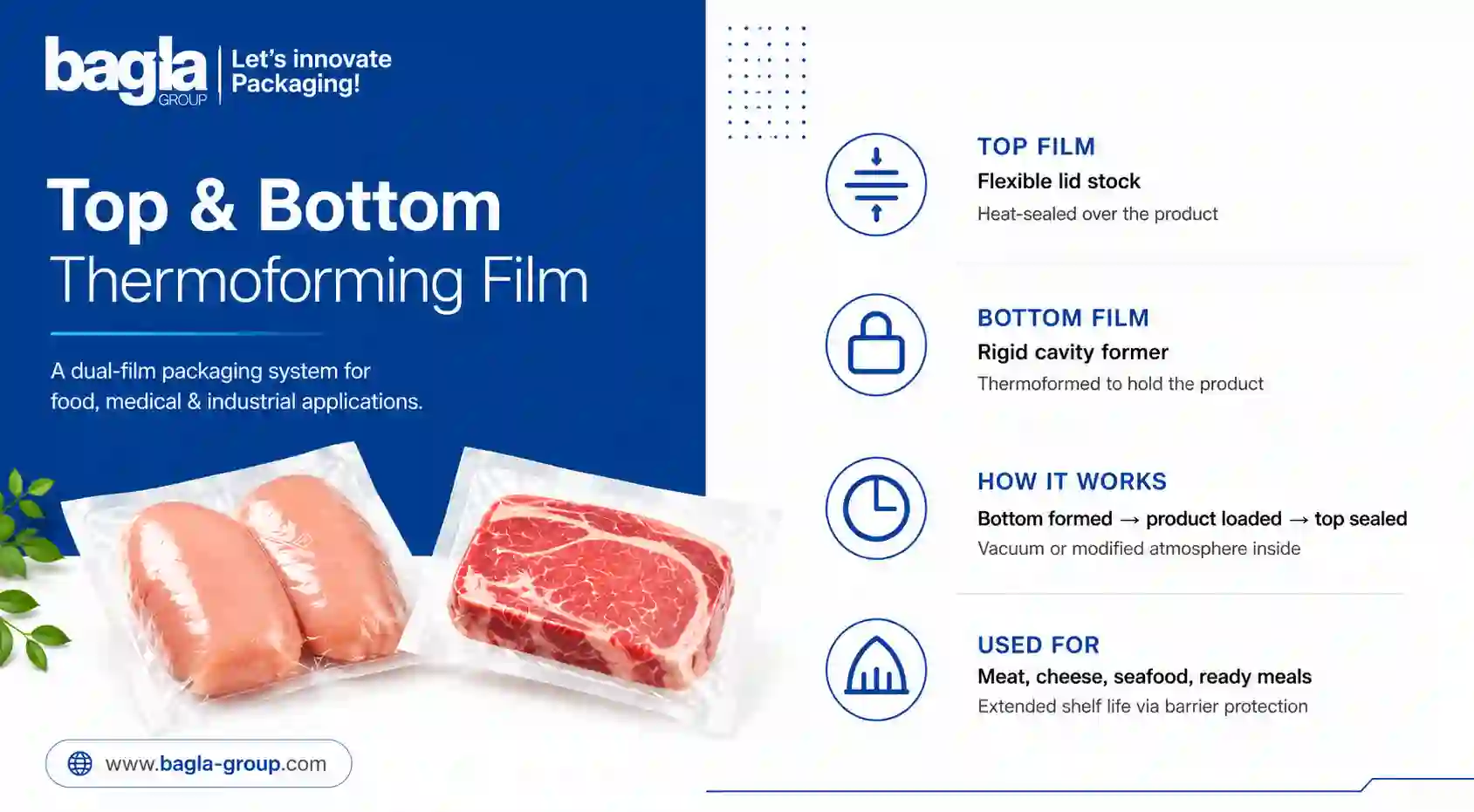
Top & Bottom Thermoforming Films are specialized packaging films used in thermoforming packaging machines. The bottom film is heated and formed into a tray or cavity that holds the food product. Once the product is placed inside, the top film is sealed over the formed cavity to create a secure package.
Together, Top & Bottom Thermoforming Films provide mechanical protection, barrier performance, and excellent sealing characteristics that help preserve food quality and extend shelf life.
The thermoforming process is widely used in food packaging because it allows manufacturers to create customized package shapes while maintaining efficient production speeds.
What Is a Bottom Thermoforming Film?
The bottom Thermoforming Film is the film that undergoes the thermoforming process. It is heated and stretched into a mold to create the desired package shape. The bottom film must provide:
- Excellent thermoformability.
- High puncture resistance.
- Reliable sealing performance.
- Strong package integrity.
- Good optical appearance.
Since the bottom film forms the package structure, it must withstand forming stresses without compromising strength or performance.
Bagla Group offers several bottom film solutions under its QuenchTek product range, including QuenchTek HB, QuenchTek MB, QuenchTek MBPP, and QuenchTek Mono. These films are designed for various food packaging requirements and processing conditions.
What Is a Top Thermoforming Film?
The top Thermoforming Film is commonly referred to as the lidding film. After the food product is placed inside the thermoformed cavity, the top film is sealed to the bottom film. The top film serves several important functions:
- Creates an airtight seal.
- Protects the product from contamination.
- Maintains product freshness.
- Enhances shelf appeal.
- Supports vacuum and MAP packaging applications.
The performance of Top & Bottom Thermoforming Films depends on the compatibility between the top and bottom layers. Proper sealing ensures package integrity and product protection throughout storage and transportation.
Top vs. Bottom Thermoforming Films | Key Differences
Understanding how they differ helps manufacturers select the right combination for their specific food packaging needs.
| Feature | Bottom Thermoforming Film | Top Thermoforming Film |
| Primary role | Forms the tray or cavity that holds the product. | Acts as the lid that seals the package. |
| Also known as | Forming film/web film | Lidding film |
| Thermoforming process | Heated and stretched into a mold to create the cavity. | Applied flat and sealed over the formed cavity. |
| Typical thickness | Thicker, to provide structure and form depth. | Thinner, since it does not need to be formed. |
| Key requirements | Thermoformability, puncture resistance, and package rigidity. | Seal strength, clarity, and easy handling. |
| Main function | Mechanical protection and package structure. | Airtight sealing and product visibility. |
| Barrier contribution | Provides a barrier across the formed cavity walls and base. | Provides a barrier across the top surface and seal area. |
| Consumer-facing surface | Usually the underside or base of the pack. | Usually, the front-facing surface at retail. |
How Do Top & Bottom Thermoforming Films Work?
The packaging process using top & bottom Thermoforming Films generally follows these steps:
- Film Feeding: The bottom film is fed into the thermoforming machine.
- Heating and Forming: The bottom film is heated and formed into cavities using molds.
- Product Loading: Food products are placed into the formed cavities.
- Vacuum or MAP Packaging: Air is removed or replaced with a modified atmosphere depending on product requirements.
- Top Film Sealing: The top film is applied and sealed to the bottom film.
- Cutting and Finishing: Individual packs are cut and prepared for distribution.
This process creates highly efficient and attractive food packaging solutions that meet modern market requirements.
Key Benefits Of Top & Bottom Thermoforming Films
- Extended Shelf Life: One of the biggest advantages of top & bottom Thermoforming Films is their ability to help maintain product freshness for longer periods. Barrier structures can significantly reduce oxygen transmission and protect food quality.
- Excellent Product Protection: These films provide strong resistance against punctures, handling damage, and transportation stress. This is particularly important for products with sharp edges or irregular shapes.
- Superior Product Presentation: High transparency and gloss improve product visibility, helping brands attract consumers on retail shelves.
- Reliable Sealing: Strong seal integrity helps prevent leakage and contamination while maintaining package security throughout the supply chain.
- High Production Efficiency: Modern top & bottom Thermoforming Films support fast sealing and efficient processing, helping manufacturers maximize productivity.
- Material Optimization: Advanced thermoforming structures can help reduce material usage while maintaining package performance.
Types of Top & Bottom Thermoforming Films
Different food products require different levels of barrier protection. As a result, top & bottom Thermoforming Films are available in multiple formats.
High-Barrier Thermoforming Films
High-barrier Thermoforming Films are designed for food products requiring extended shelf life and superior protection against oxygen, moisture, and aroma transfer.
These films typically include an EVOH barrier layer that provides outstanding oxygen barrier properties. QuenchTek HB is Bagla Group’s High-Barrier Thermoforming Film solution for demanding food packaging applications.
Medium-Barrier Thermoforming Films
Medium-barrier Thermoforming Films offer a balance between protection and cost-effectiveness. They are suitable for food products that require dependable barrier performance without the need for maximum oxygen protection.
QuenchTek MB is Bagla Group’s Medium-Barrier Thermoforming Film solution designed for a wide range of food packaging applications.
High-Temperature Thermoforming Films
Certain food products undergo cooking, pasteurization, sterilization, or microwave heating. These applications require specialized Thermoforming Films capable of performing under elevated temperatures.
QuenchTek MBPP is a PA/PP Medium-Barrier Thermoforming Film developed for high-temperature food packaging applications. It performs reliably during cooking, pasteurization, sterilization, and microwave heating processes.
Recyclable Mono-Material Thermoforming Films
The US and European packaging markets are increasingly focusing on recyclable structures. Mono-material Thermoforming Films support recycling objectives while maintaining packaging performance.
QuenchTek Mono is Bagla Group’s Mono-Material Thermoforming Film solution designed to support recyclable packaging initiatives while delivering dependable thermoforming performance.
Food Applications Of Top & Bottom Thermoforming Films
Top & Bottom Thermoforming Films are widely used across the food industry because of their versatility and protective properties. Common applications include:
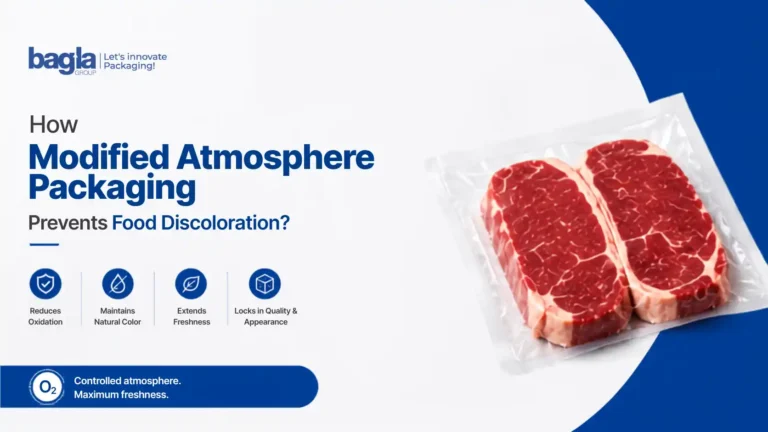
- Fresh Meat Packaging: These films provide excellent puncture resistance and barrier protection for fresh meat products.
- Processed Meat Packaging: Processed meats benefit from reliable sealing and shelf-life extension offered by thermoforming packaging.
- Poultry Packaging: Thermoforming packaging helps maintain freshness while protecting poultry products during distribution.
- Fish and Seafood Packaging: Seafood products often require high levels of protection against oxygen and moisture exposure. Thermoforming Films provide dependable performance for these applications.
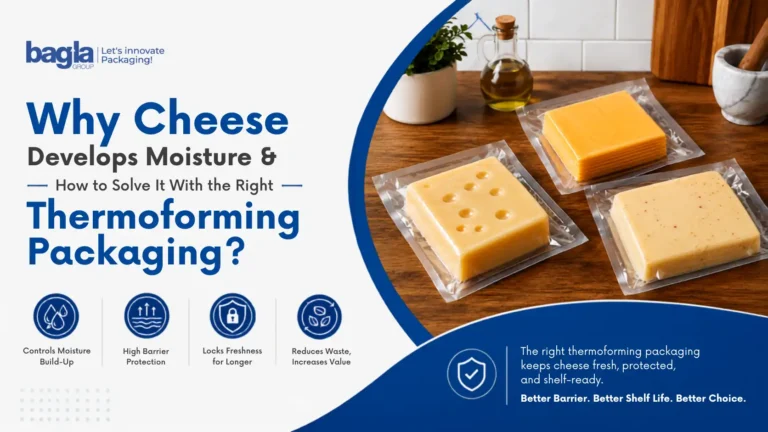
- Cheese Packaging: Thermoforming packaging helps preserve flavor, texture, and freshness in cheese products.
- Dairy Products: Many dairy products utilize thermoformed packaging to maintain product quality and enhance shelf presentation.
- Frozen Food Packaging: The strong mechanical properties of Top & Bottom Thermoforming Films help protect frozen food products during storage and transportation.
- Ready-to-Eat and Convenience Foods: Thermoforming packaging is widely used for ready meals and convenience food products that require reliable package integrity and attractive presentation.
Bagla Group’s Thermoforming Film Solutions
Bagla Group offers a comprehensive range of Top & Bottom Thermoforming Films designed to meet diverse food packaging requirements.
QuenchTek HB
QuenchTek HB is a High-Barrier Thermoforming Film designed for food products requiring superior oxygen protection and extended shelf life. It offers excellent transparency, puncture resistance, and reliable sealing performance.
QuenchTek MB
QuenchTek MB is a Medium-Barrier Thermoforming Film that combines strong mechanical properties, fast sealing, and high transparency for a variety of food packaging applications.
QuenchTek MBPP
QuenchTek MBPP is designed for high-temperature food packaging applications and provides excellent thermoformability, transparency, and puncture resistance.
QuenchTek Mono
QuenchTek Mono is a PA-free, Mono-Material PE Thermoforming Film designed to support recyclable packaging. It delivers reliable thermoforming performance while helping brands meet sustainability goals and align with evolving PPWR requirements.
Why Choose Bagla Group for Top & Bottom Thermoforming Films?
Bagla Group is a trusted manufacturer of Thermoforming Films with advanced production capabilities and a strong focus on food packaging solutions. Key advantages include:
- High puncture resistance.
- Excellent transparency and gloss.
- Reliable sealing performance.
- Exceptional thermoformability.
- Availability of high-barrier, medium-barrier, high-temperature, and recyclable solutions.
- Customizable film options for different food applications.
Note: While many thermoforming applications in the market typically use 70-micron films, Bagla Group offers a 65-micron solution that helps optimize material consumption while maintaining reliable packaging performance.
Conclusion
Top & Bottom Thermoforming Films are essential components of modern food packaging. They work together to create secure, attractive, and high-performance packages that protect food products throughout their lifecycle.
From fresh meat and seafood to dairy products and ready meals, top & bottom Thermoforming Films provide the barrier protection, seal integrity, and durability needed for today’s food packaging requirements.
Bagla Group offers a complete portfolio of Thermoforming Film solutions, including QuenchTek HB, QuenchTek MB, QuenchTek MBPP, and QuenchTek Mono, helping food manufacturers choose the right packaging solution for their specific needs.