While using Packaging Tape or applying it to an item, have you ever wondered how it knows when to stick or when to let go? Or why do some Packaging Tapes stay secure in rough shipping conditions, and others fail miserably?
The answer is the adhesive technology behind the tape. At Bagla Group, this technology is at the heart of every packaging solution. So, to keep you updated, this blog will introduce you to the science behind how Packaging Tape adhesive works. Here, you will explore different adhesive types and explain what makes Bagla Group’s tapes reliable, durable, and industry-preferred.
What Is Adhesive in Packaging Tape?
In simple words, an adhesive is a sticky substance on one side of the tape. This substance enables it to bond to surfaces. Most of the Packaging Tapes, especially from Bagla Group, use pressure-sensitive adhesives (PSAs). These adhesives are very helpful to form a bond when pressure is applied, without any activation by heat or water.
The adhesive layers they use are very thin but powerful. It is designed to flow into microscopic pores on the surface and hold firm through a combination of physical and chemical forces.
How Does Packaging Tape Adhesive Work? – Science of Adhesion
Packaging Tapes typically use what is known as a Pressure-Sensitive Adhesive (PSA). Unlike glue that requires water, heat, or chemical curing, pressure-sensitive adhesives bond instantly when pressure is applied. The adhesive works in four major stages:
1. Initial Contact With the Surface
When the tape touches the carton or packaging surface, the adhesive begins interacting with the material immediately. However, at this stage, the bond is still relatively weak.
The adhesive is specially formulated to remain slightly soft and flexible, allowing it to adapt to the texture of the surface. For example:
- Corrugated boxes are not completely smooth
- Recycled cartons contain fibers and pores
- Plastic surfaces may have low surface energy
The adhesive must adjust itself according to these surface conditions.
2. Pressure Activates the Adhesive
Packaging Tape adhesives are pressure-sensitive, meaning they require force to create an effective bond. When pressure is applied using:
- A hand
- Tape dispenser
- Automated carton sealing machine
The adhesive spreads across the microscopic irregularities of the surface. This process is known as wet-out. The more effectively the adhesive flows into tiny gaps and pores, the stronger the bond becomes.
3. Molecular Forces Create Adhesion
Once the adhesive fully contacts the surface, molecular attraction begins forming between the tape and the substrate. This phenomenon is called adhesion. Adhesion refers to the ability of the adhesive to stick to another material. At a microscopic level, intermolecular forces create a bond strong enough to:
- Hold heavy cartons closed
- Resist vibrations during shipping
- Handle warehouse stacking pressure
- Prevent accidental opening during transit
Even though these molecular forces are invisible, they are responsible for the tape’s holding power.
4. Internal Strength Maintains the Bond
While adhesion helps the tape stick to the surface, the adhesive must also maintain its own internal strength. This property is called cohesion. Cohesion prevents the adhesive from:
- Splitting apart
- Leaving residue
- Stretching excessively
- Breaking under load
A high-quality Packaging Tape maintains a proper balance between:
- Strong adhesion to the carton
- Strong cohesion within the adhesive layer
Without this balance, the tape may either:
- Peel off easily
- Tear during use
- Leave adhesive residue behind
Types of Tape Adhesives Through Which Packaging Tape Adhesive Works
Packaging Tape works using different types of pressure-sensitive adhesives (PSAs) that help the tape bond securely to cartons and packaging surfaces. Each adhesive type offers unique properties depending on the application and environmental conditions.
Acrylic Adhesives (Used in BOPP Tapes)
These adhesives are used in the BOPP tape products because they provide a long-lasting bond. By using these adhesives, a tape manufacturer can produce UV- and weather-resistant tapes. Acrylic adhesives are a suitable choice for both hot and cold temperatures. The tapes manufactured using acrylic adhesives are ideal for long-term storage, shipping, and export packaging.
Hot Melt Adhesives (Used in Reinforced or Filament Tapes)
These adhesives are used in the production of reinforced or filament tapes. A reliable choice to provide high tack and a strong bond & great shear resistance. These adhesive tapes are generally excellent for heavy-duty bundling and sealing.
Rubber-Based Adhesives (Used in Double-Sided Tapes)
These adhesive choices are one of the reliable solutions for double-sided tapes. Using these adhesive tapes can simply provide excellent initial tack. These adhesives can adhere to low-energy surfaces like plastics. A better option for short-term applications. The tapes are manufactured with rubber-based adhesives commonly used in general-purpose packaging and office supplies.
Structure Of Adhesive Tapes
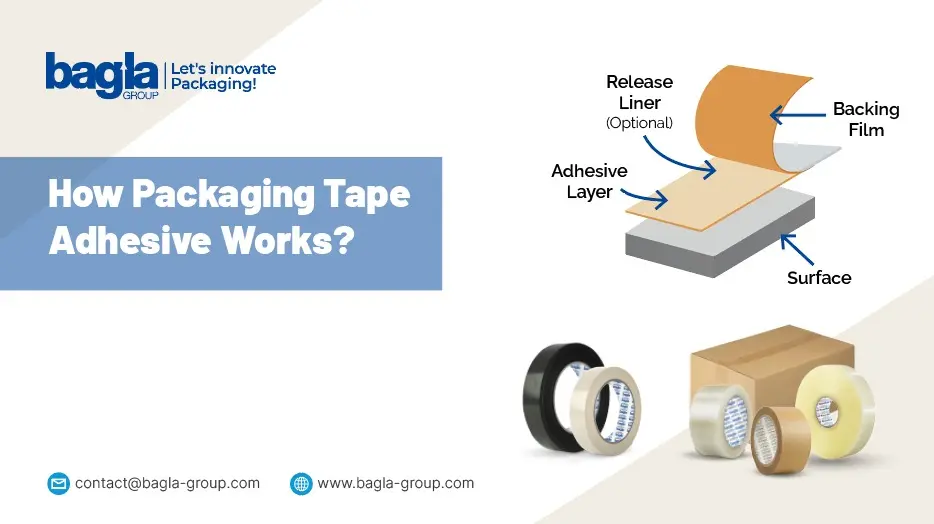
The structure of the adhesive tapes consists of the following:
- Release Liner (Optional): Used in double-sided tapes to protect the adhesive.
- Adhesive Layer: Pressure-sensitive material that activates on contact.
- Backing Film: Material like BOPP, Kraft, or reinforced fibers providing strength.
- Printing Layer (Optional): Used for branding or tamper-evident security.
This one is the safest structure for the adhesive tapes. This multiplayer structure is used by the Bagla Group, and it ensures that the tapes are not just sticky but also reliable and secure.
How Tape Manufacturers Ensure Long-Lasting Adhesion?
If you are willing to understand how the tape manufacturers ensure long-lasting adhesion and how Adhesive Tape adhesive works, then you must understand the following:
- Formulation Testing: Each adhesive bunch goes for the lab testing to ensure consistent tack, peel strength, and cohesion across temperature and humidity conditions.
- Temperature Tolerance: The manufacturing firms of tapes (Bagla Group) retain performance in both low and high temperatures, making them ideal for cold storage, export shipping, and warehouse usage.
- Moisture and UV Resistance: Selected adhesives are formulated to resist humidity and sunlight exposure. It is very crucial for long-distance or long-term storage.
- Eco-Friendly Options: Most of the well-reputed companies, such as Bagla Group, offer kraft paper tapes with natural rubber-based adhesives for customers prioritizing sustainable packaging.
Conclusion | Packaging Tape Adhesive Works
As per the above-mentioned information, you can justify how the Packaging Tape adhesive works. The Packaging Tapes have multiple features and structures that ensure that the tapes are manufactured by the Packaging Tape manufacturers to work as per your requirements. Here we have mentioned the best Packaging Tape manufacturer that works as per your requirement and can also. So, before diving into the industry must ensure to choose the best Packaging Tapes provider.