Walk down any US grocery aisle, and you’ll notice something consumers rarely think about: fresh-cut fruit still looks bright red, ground beef holds its cherry-pink color, and packaged salmon retains its appetizing hue for days after processing. This isn’t luck — it’s science. Modified Atmosphere Packaging (MAP) prevents food discoloration by controlling the exact gas environment surrounding a product, and for US packaging companies and distributors, understanding this technology is no longer optional.
As retailers and food brands demand longer shelf life, better visual appeal, and reduced waste, packaging converters and material distributors across the United States are being asked tougher questions by their customers. For example, why does one tray keep produce fresher longer than another? Why do some films fog or discolor faster? The answer almost always traces back to the quality of the packaging material and how MAP prevents food discoloration in the first place.
In this article, we’ll break down exactly how Modified Atmosphere Packaging prevents food discoloration, the science behind it, and why the raw material manufacturing process, specifically, German water-quenching technology, plays an important role in packaging performance.
What Is Modified Atmosphere Packaging?
Modified Atmosphere Packaging is a preservation method that alters the natural composition of air inside a food package. Standard atmospheric air contains roughly 78% nitrogen, 21% oxygen, and trace amounts of carbon dioxide. MAP systems replace this mix with a customized blend, typically combinations of nitrogen (N2), carbon dioxide (CO2), and controlled or reduced oxygen (O2), tailored to the specific food product being packaged. This customized gas blend is the core reason Modified Atmosphere Packaging prevents food discoloration across such a wide range of perishables.
This isn’t a one-size-fits-all process. Red meat, poultry, seafood, baked goods, and fresh produce each require different gas ratios to maintain color, texture, and safety. Once the ideal gas mixture is identified, it’s sealed inside a barrier package, usually a rigid tray with a film lid or a flexible pouch, designed to hold that atmosphere stable until the consumer opens it. Every design decision at this stage exists for one reason: Modified Atmosphere Packaging prevents food discoloration only when the sealed atmosphere stays intact.
The Science Of Food Discoloration
Before exploring how this technology protects color and freshness, it helps to understand why food discolors in the first place.
- Oxidation Reactions: Oxygen exposure is the single biggest driver of color loss in perishable foods. In red meat, myoglobin, the protein responsible for that fresh red color, reacts with oxygen and gradually oxidizes into metmyoglobin, a brown pigment. This is why aging steak turns grayish-brown at the edges.
- Enzymatic Browning: Cut fruits and vegetables contain enzymes (such as polyphenol oxidase) that react with oxygen the moment their cell walls are broken during slicing or peeling. This triggers rapid browning in apples, potatoes, avocados, and lettuce. Controlling oxygen exposure at the moment of cutting is exactly how Modified Atmosphere Packaging prevents food discoloration in fresh-cut produce.
- Microbial Growth: Bacterial and mold growth doesn’t just cause spoilage odor; it visibly discolors food surfaces, especially in high-moisture products like seafood and deli meats. Suppressing this microbial activity is another way Modified Atmosphere Packaging prevents food discoloration in moisture-rich categories.
- Light and Temperature Exposure: UV light and temperature fluctuations accelerate all of the above reactions, compounding discoloration even inside “properly” packaged products if the barrier material is inadequate. This is another reason Modified Atmosphere Packaging reliably prevents food discoloration only when paired with high-quality barrier materials.
The Mechanism Behind MAP’s Anti-Discoloration Effect
This is where MAP technology earns its place as one of the most important innovations in modern food packaging. Here’s exactly how Modified Atmosphere Packaging prevents food discoloration in practice:
- Oxygen Reduction Slows Oxidative Browning: By flushing out ambient air and replacing it with a low-oxygen or oxygen-free gas blend, MAP dramatically slows the oxidation reactions responsible for browning in meat and produce. Less available oxygen means less metmyoglobin formation and less enzymatic browning — the two leading causes of visible discoloration. This oxygen-reduction step is the primary mechanism by which Modified Atmosphere Packaging prevents food discoloration across nearly every product category.
- Carbon Dioxide Suppresses Microbial Activity: CO2 has a natural antimicrobial effect, inhibiting the growth of aerobic bacteria and mold that would otherwise degrade both the appearance and safety of the product. This is particularly critical for seafood and poultry, where microbial discoloration can appear within 24-48 hours under standard atmospheric conditions. Through this antimicrobial action, MAP prevents food discoloration that would otherwise emerge well before the product’s sell-by date.
- Nitrogen Acts as a Filler Gas: Because nitrogen is inert, it’s used to displace oxygen without altering the food’s chemistry, while also preventing package collapse in products sensitive to CO2 absorption, such as baked goods and some cheeses. Even in this supporting role, nitrogen helps ensure Modified Atmosphere Packaging prevents food discoloration without sacrificing package structure.
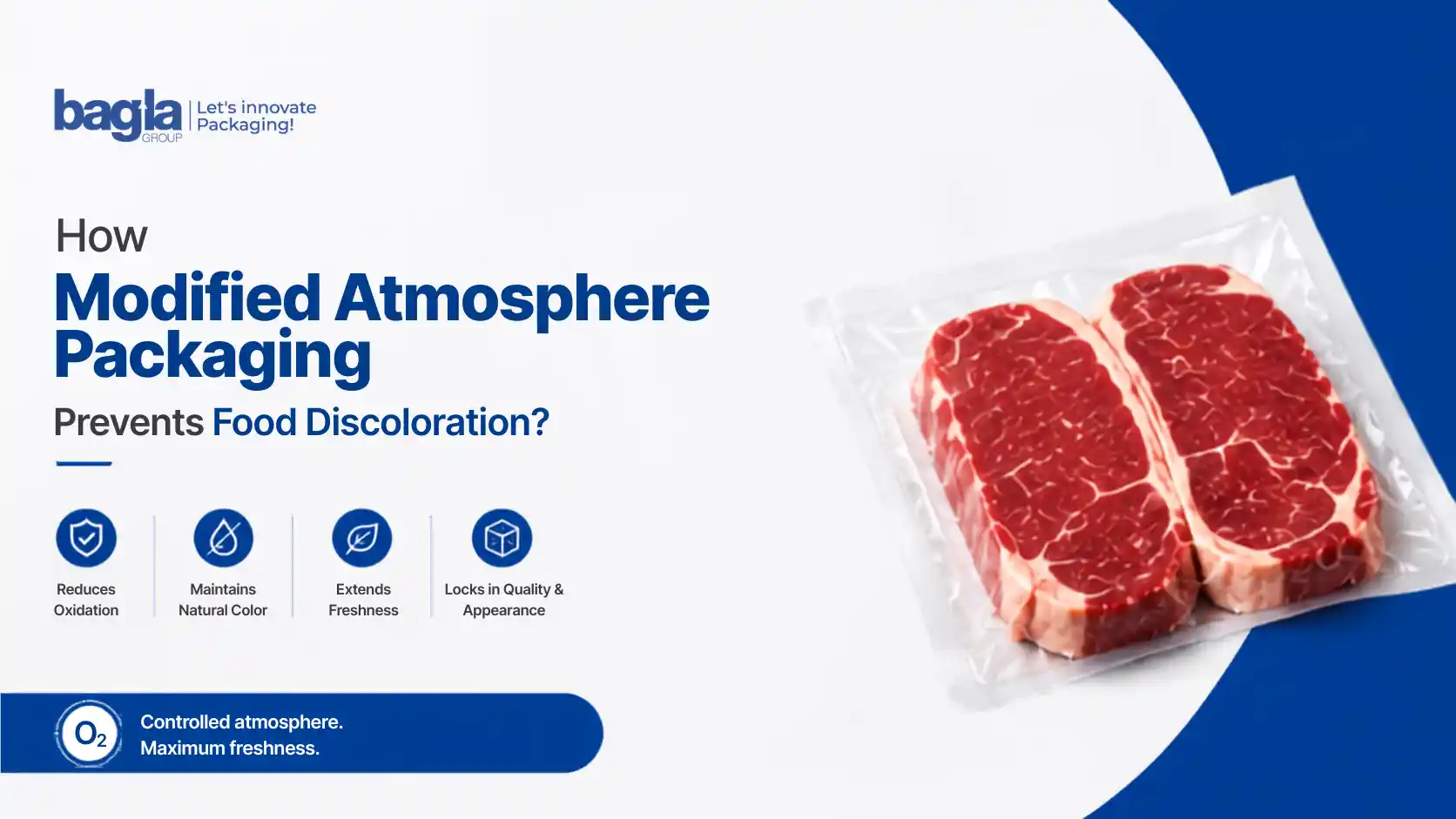
- Controlled Low-Oxygen Blends Maintain Bright Red Meat Color: Interestingly, red meat packaging often uses a small percentage of oxygen (not zero) combined with CO2, because a specific low level of oxygen keeps myoglobin in its bright red oxymyoglobin state longer, rather than allowing it to shift toward brown metmyoglobin. Getting this ratio precisely right is where advanced gas-flush technology and high-barrier films matter most. This delicate balance is exactly how Modified Atmosphere Packaging prevents food discoloration in red meat without sacrificing color vibrancy.
- Barrier Film Integrity: None of this works if the packaging material itself leaks gas or allows oxygen ingress through micro-permeability. This is the piece many distributors overlook, and it’s exactly where raw material manufacturing quality becomes the deciding factor in whether the anti-discoloration effect holds up over the product’s full shelf life, or fails within days. Put simply, Modified Atmosphere Packaging prevents food discoloration only for as long as the packaging material maintains its seal.
Why Raw Material Quality Determines MAP Performance?
US food packaging companies and material distributors know that not all Thermoforming Films deliver the same performance, even when their specifications appear similar on paper. The difference often comes down to how the film is manufactured and how consistently its structure performs during thermoforming and packaging. Two factors matter most for MAP-compatible thermoforming packaging:
- Barrier consistency: Consistent film thickness and a uniform barrier structure are essential for maintaining reliable protection against oxygen and moisture. Variations in the film can create weak points that affect gas retention, product protection, and shelf life.
- Clarity and structural strength: Food brands and retailers need clear, visually appealing packaging that allows consumers to see the product at a glance. At the same time, the film must provide the strength, puncture resistance, and forming performance required for reliable packaging production and handling.
This is why the manufacturing process behind the Thermoforming Film can be just as important as the MAP equipment and gas-flushing process used on the packaging line. Ultimately, consistent film quality plays a critical role in maintaining package integrity, protecting food quality, and delivering reliable MAP performance from one production batch to the next.
The Role of German Water Quenching Technology
At Bagla Group, we engineer our QuenchTek Thermoforming Films using German water quenching technology, a precision cooling process that rapidly and uniformly cools molten polymer immediately after extrusion. Here’s why this matters for MAP-compatible packaging:
- Uniform Crystallinity: Rapid, even cooling produces a more consistent molecular structure across the entire sheet, reducing weak spots that could compromise gas barrier performance.
- Superior Optical Clarity: Water quenching minimizes haze and yellowing, giving converters material that showcases food color accurately — which matters enormously when the entire point of MAP is to preserve visible freshness. Clear, accurate color rendering is a direct example of how Modified Atmosphere Packaging prevents food discoloration from ever being visible to the shopper.
- Enhanced Mechanical Strength: The controlled cooling process improves tensile strength and impact resistance, so trays and films hold their seal integrity through transport, retail handling, and cold-chain fluctuations.
- Better Sealing Reliability: Consistent material properties translate to more reliable heat-sealing on packaging lines, reducing the leak risk that undermines an otherwise well-designed MAP system.
For US packaging companies and distributors sourcing materials for meat, poultry, seafood, and produce packaging, this translates directly into fewer customer complaints about premature discoloration, fewer returns, and stronger private-label retail performance. When the material performs as engineered, Modified Atmosphere Packaging prevents food discoloration reliably at every point in the supply chain.
Practical Applications Across Food Categories
- Fresh Meat and Poultry: MAP trays using high-clarity, high-barrier film keep ground beef, chicken, and pork looking fresh for retail display periods of 7-14 days, compared to just 2-3 days in standard overwrap packaging.
- Seafood: CO2-rich atmospheres combined with strong barrier trays extend both shelf life and color retention in fish fillets and shellfish, which are especially prone to rapid discoloration and odor development.
- Fresh-Cut Produce: Salad greens, sliced apples, and pre-cut vegetables rely on carefully balanced low-oxygen environments to prevent enzymatic browning while still allowing enough respiration to avoid anaerobic spoilage.
- Bakery and Deli: Nitrogen-flushed packaging prevents mold growth and staling discoloration in baked goods without the package collapsing, a common issue when CO2 is absorbed by starch-based products. In bakery applications, this is how Modified Atmosphere Packaging prevents food discoloration and staling without compromising package shape.
What US Packaging Distributors Should Look for in MAP Materials?
If you’re sourcing or specifying materials for MAP applications, prioritize:
- Verified oxygen transmission rate (OTR) performance data.
- Consistent optical clarity across production batches.
- Proven seal integrity under cold-chain conditions.
- A manufacturing process with documented quality controls, such as water quenching technology, that supports batch-to-batch consistency.
These factors determine whether your customers’ packaging lines can reliably deliver on the promise of consistent, fresh-looking food — or whether they’ll face costly returns and retailer pushback.
Partnering With Bagla Group
Bagla Group supplies US packaging companies and material distributors with water-cooled Thermoforming Films, delivering the barrier consistency, clarity, and strength that MAP applications demand. Our manufacturing process is built specifically to help converters produce trays and films that keep food looking fresh from the processing line to the retail shelf.
If your business is evaluating new material suppliers for meat, seafood, produce, or bakery packaging, explore our Thermoforming packaging solutions or learn more about our manufacturing capabilities to see how our materials support high-performance Modified Atmosphere Packaging systems. You can also visit our contact page to request samples or speak with our technical team about your specific packaging requirements.
Conclusion
Understanding how Modified Atmosphere Packaging prevents food discoloration gives US packaging companies and distributors a real edge when advising customers and specifying materials. The gas mixture matters, but it only works as well as the material holding it in place. By choosing suppliers who invest in advanced manufacturing processes like German water quenching technology, converters and distributors can offer their customers packaging that consistently delivers on shelf life, visual appeal, and food safety — the three factors that ultimately drive retail success.
As demand for fresher-looking, longer-lasting packaged food grows across the US market, the companies that source the right materials today will be the ones winning retailer contracts tomorrow.
FAQs
Modified Atmosphere Packaging is a preservation method that replaces the normal air inside a food package with a customized blend of gases — typically nitrogen, carbon dioxide, and controlled oxygen levels — to slow spoilage and maintain the product’s natural color and texture.
It works by reducing oxygen exposure, which slows the oxidation reactions that turn red meat brown and cause enzymatic browning in cut produce. Carbon dioxide also suppresses microbial growth that would otherwise degrade product appearance.
A small, precisely controlled percentage of oxygen helps keep myoglobin in its bright red “oxymyoglobin” state longer. Removing oxygen completely can actually cause meat to look darker or purplish, which is why exact gas ratios matter more than simply eliminating oxygen.
The gas mixture only works if the tray or film holds it in place without leaking. Inconsistent material thickness, poor barrier properties, or weak seals allow oxygen to seep in, undermining the entire MAP process regardless of how well the gas flush was calibrated.
Water quenching rapidly and uniformly cools the polymer right after extrusion, producing more consistent crystallinity across the sheet. This results in better clarity, stronger barrier performance, and more reliable heat-sealing — all of which directly support MAP’s ability to prevent discoloration over the product’s full shelf life.