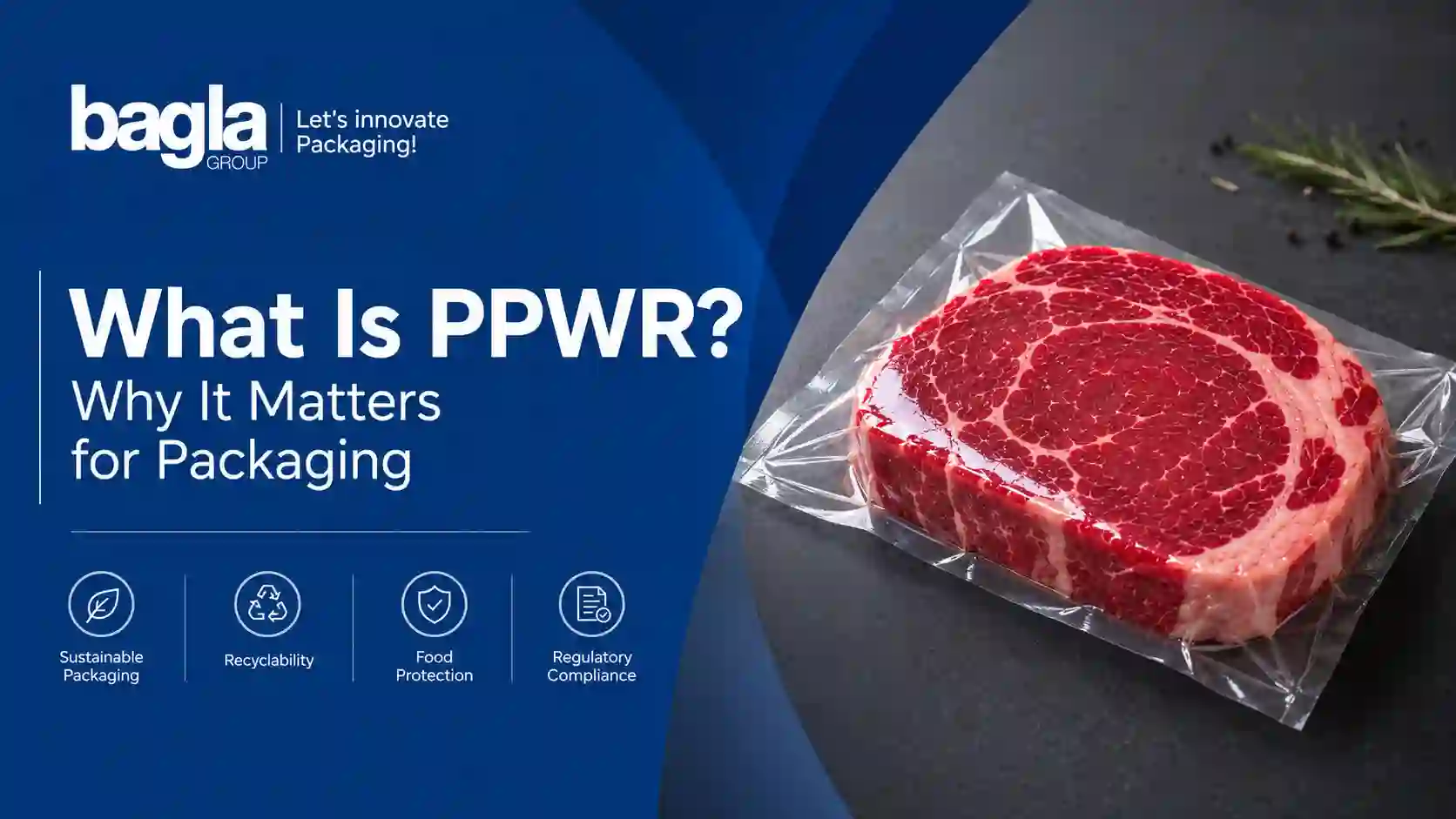
PPWR stands for the EU Packaging and Packaging Waste Regulation, a sweeping law that requires nearly all packaging sold in the European Union to be recyclable, made with recycled content, and designed to cut waste. PPWR-ready packaging films are flexible films engineered to meet those rules, most often as recyclable mono-material structures. If you’re a U.S. brand selling into Europe, or just trying to stay ahead of America’s own packaging laws, switching to a film like QuenchTek Mono from Bagla Group is one of the smartest moves you can make right now.
Now let’s unpack what that actually means for your business.
What Is PPWR?
PPWR, the Packaging and Packaging Waste Regulation, is the European Union’s main law for cutting packaging waste. It took effect in 2025, replacing an outdated 1994 directive.
The key thing to know: PPWR is a regulation, not a directive. A directive lets each EU country interpret the rules its own way. A regulation applies the same way across all 27 member states, no exceptions, no country-by-country differences. If your product reaches the EU, these rules apply. That’s the first reason PPWR matters for packaging worldwide.
And you don’t have to be based in Europe to be affected. If you export food, supplements, cosmetics, or any plastic-wrapped goods to the EU, your packaging must comply — or risk being refused at the border, pulled from shelves, or fined. Switching to PPWR-ready packaging films early removes that risk before it hits your shipments.
There’s a U.S. angle too. States like California, Colorado, Maine, Oregon, and Minnesota already have Extended Producer Responsibility (EPR) laws pushing the same way: less waste, more recyclability, more accountability. PPWR is a preview of where U.S. rules are heading — so PPWR matters for packaging at home, not just abroad.
Why PPWR Matters for Packaging: The Four Big Shifts
PPWR isn’t a single rule. It’s a bundle of requirements that, taken together, reshape how packaging gets designed, sourced, and disposed of. Here are the four shifts that explain why PPWR matters for packaging at every stage of the supply chain.
- Everything has to be recyclable. By 2030, all packaging placed on the EU market must be recyclable under defined “Design for Recycling” criteria. By 2035, it has to be recyclable at scale — meaning the recycling infrastructure actually exists to process it. Multi-layer laminates that combine different plastics (and sometimes aluminum) are the biggest casualties here because they’re notoriously hard to recycle. This single shift is why PPWR-ready packaging films built from one polymer are taking over.
- Recycled content becomes mandatory. PPWR sets minimum recycled-content targets for plastic packaging, ramping up over time. Here too, why PPWR matters for packaging is simple: brands can no longer rely entirely on virgin plastic and call it a day.
- Packaging has to shrink. The regulation targets over-packaging and space. If your box is half air, that’s now a compliance problem, not just a sustainability talking point.
- Labeling and transparency get stricter. Harmonized labels that tell consumers exactly how to sort and dispose of packaging are part of the deal, along with clearer documentation across the supply chain.
Stack these up and one conclusion becomes obvious about why PPWR matters for packaging: the old multi-material film — great barrier protection but impossible to recycle — is on its way out. The future belongs to PPWR-ready packaging films designed for recyclability from the very first layer.
What Are PPWR-Ready Packaging Films?
PPWR-ready packaging films are flexible packaging materials specifically engineered to satisfy the recyclability and design requirements of the regulation. In practice, the overwhelming majority of these films share one defining trait: they’re mono-material.
Mono-material means the entire film structure is built from a single polymer family — typically all polyethylene (PE) or all polypropylene (PP) — instead of a mix of incompatible plastics layered together. This is the core reason why PPWR matters for packaging design at the material level. This matters enormously for recycling. When a film is made from one polymer, it can flow cleanly into existing recycling streams and be reprocessed into usable material. A traditional laminate, by contrast, has to be separated layer by layer — expensive, energy-hungry, and often just not done — so it usually ends up in a landfill. That contrast is the clearest illustration of why PPWR matters for packaging material choices today.
QuenchTek Mono by Bagla Group: PPWR-Ready Packaging Films That Don’t Compromise
This is where QuenchTek Mono from Bagla Group comes in. QuenchTek Mono is a recyclable mono-material film designed from the ground up for a PPWR world, without making you give up the performance you actually need. If you’ve been wondering why PPWR matters for packaging like yours, this is the kind of product that turns the regulation from a problem into an upgrade. It belongs to the new generation of PPWR-ready packaging films that deliver high-barrier protection and strong mechanical properties while remaining fully recyclable within a single polymer stream. In other words, it answers the question every packaging buyer is really asking: “Can I be compliant and still keep my product fresh, protected, and shelf-ready?”
Here’s why QuenchTek Mono stands out for U.S. brands navigating why PPWR matters for packaging:
- Single-polymer recyclability: As a true mono-material structure, QuenchTek Mono fits cleanly into recycling streams, directly addressing PPWR’s “Design for Recycling” requirements rather than working around them.
- Performance that protects your product: Strong barrier properties guard against moisture and oxygen, keeping food, supplements, and sensitive goods fresh through the supply chain. You’re not trading shelf life for sustainability.
- Machine-friendly conversion: It’s engineered to run on standard packaging equipment, so switching to PPWR-ready packaging films doesn’t mean ripping out your existing lines.
- Print-ready and shelf-ready: Your branding still looks sharp. Compliance shouldn’t cost you visual punch, and with QuenchTek Mono, it doesn’t.
- Backed by Bagla Group’s expertise: Bagla Group is a globally recognized flexible-packaging manufacturer with deep technical know-how, so you’re getting a film backed by real materials science and reliable supply.
Is Your Packaging PPWR-Ready? Don’t Get Stopped at the EU Border.
QuenchTek™ Mono by Bagla Group is a fully recyclable, high-barrier Mono-Material Film built to meet PPWR — no line changes, no performance trade-offs.
How To Get Your Packaging PPWR-Ready?
Once you grasp why PPWR matters for packaging, the next step is execution. Here’s a straightforward way to approach the transition to PPWR-ready packaging films.
- Audit your current packaging: Identify which of your films are multi-material laminates; those are your biggest compliance risks. Anything mixing PE, PP, PET, and aluminum in one structure needs a closer look.
- Map your exposure: Figure out which products go to the EU and which fall under U.S. state EPR laws. This tells you where the urgency really is — and reinforces why PPWR matters for packaging decisions on both continents.
- Prioritize the switch to mono-material: For most flexible packaging, moving to recyclable PPWR-ready packaging films like QuenchTek Mono is the single highest-impact change you can make.
- Validate performance early: Test barrier, sealing, and machinability on your actual lines before a full rollout. A good supplier will support this. Bagla Group’s team can help you trial QuenchTek Mono against your real-world requirements.
- Document everything: PPWR rewards transparency. Keep clear records of materials, recycled content, and recyclability claims so you’re audit-ready.
Conclusion
PPWR isn’t a distant European challenge you can put off; it’s a clear signal of where global packaging is going, and understanding why PPWR matters for packaging today puts U.S. brands ahead of the curve. The companies that win won’t be the ones who panicked at the deadline. They’ll be the ones who saw it coming and quietly upgraded to PPWR-ready packaging films that are recyclable and high-performing.
That’s exactly what QuenchTek Mono by Bagla Group delivers: a PPWR-ready, mono-material film that keeps your products protected, your lines running, and your packaging