Fresh meat and cheese are some of the hardest products to package well. They need strong barrier protection to stay fresh, which is why the industry leaned on multi-material films for so long. The catch is that those films are very hard to recycle.
Recycle-Ready Thermoforming Films are changing that. They give meat and cheese the protection they need, while leaving you with a package that can actually be recycled, not one that goes straight to landfill.
For brands selling in the US, this matters more every year. Shoppers are reading labels, retailers are setting sustainability targets, and packaging rules keep getting stricter. The pressure to switch to recyclable packaging is only going up.
The good news is that you no longer have to choose between protection and recyclability. In this guide, we will explain what Recycle-Ready Thermoforming Films are, why traditional packaging falls short, and how QuenchTek Mono from Bagla Group helps you get both
What Are Recycle-Ready Thermoforming Films?
Thermoforming Film is the workhorse behind a lot of packaging you already know. In a form-fill-seal line, a bottom film is heated and shaped into a pocket; the product drops in, and a top film seals over it.
Bacon, deli meat, sausages, sliced and block cheese, and marinated proteins are mostly packed this way.
“Recycle-ready” is the part that has changed. It means the film was designed from the start to fit a recycling stream that actually exists.
Instead of mixing several different plastics that no recycler can pull apart, the film sticks to a single plastic family. Same protection — but now there is a real path to recycling it.
That “real path” is the whole point. Plenty of packaging gets called recyclable when, in practice, it never gets recycled. QuenchTek Mono is the Recycle-Ready Thermoforming Film built to work with the recycling systems already on the ground, so the claim holds up.
Why Does Traditional Meat And Cheese Packaging Fall Short?
Meat and cheese are picky products. Meat needs a strong oxygen barrier to hold its color and slow spoilage; cheese needs moisture control so it does not dry out or sweat.
To hit all of that, most conventional films stack several different plastics into one structure. One of the usual ingredients in that stack is polyamide — better known as nylon (PA).
PA performs beautifully; it just creates a mess in the recycling bin.
When nylon is blended with polyethylene and other layers, you get a mixed-plastic film. These materials do not melt or behave the same way, so they contaminate each other during recycling.
Recyclers usually cannot separate them at a reasonable cost. As a result, most of these packs end up in landfills or incineration.
So brands were stuck with a hard choice: strong protection or easy recycling, but not both. Recycle-ready films exist to remove that choice.
Where QuenchTek Mono Comes In?
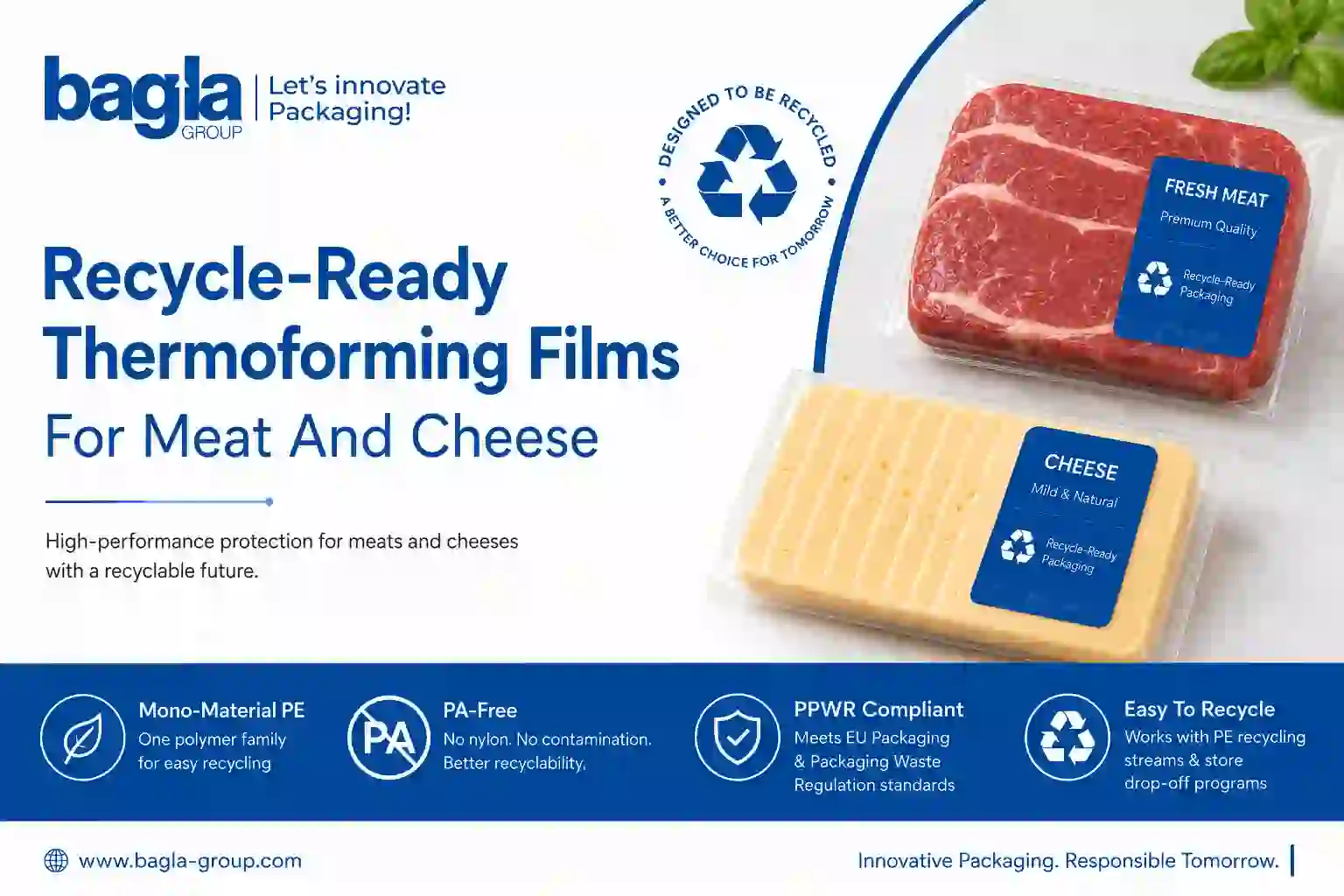
QuenchTek Mono, from Bagla Group, is a range of Recycle-Ready Thermoforming Films made for fresh meat and cheese. It is tuned for the forming and barrier demands of these products, yet built simply enough to recycle.
Bagla Group develops flexible packaging films with sustainability built into the design, not bolted on afterward. QuenchTek Mono is a clear example of that approach: real protection and a recyclable structure in the same film.
Mono-material PE
QuenchTek Mono is a Mono-Material Polyethylene (PE) Film. Instead of layering incompatible plastics, the structure is built around one polymer family.
That is the heart of recycle-ready design: when a package is essentially one type of plastic, recyclers can process it cleanly without separating the layers.
PE is also one of the most widely collected and recognized plastics, so the film has a genuine chance of being recycled, not just labeled that way.
PA-free
QuenchTek Mono is PA-free: no polyamide, no nylon.
This is a quiet but important detail, because removing PA is exactly what keeps the film inside the polyethylene recycling stream.
The film delivers its barrier and forming performance without relying on nylon, so you keep the protection and avoid contamination problems.
PPWR Compliant
QuenchTek Mono is PPWR compliant. The EU’s Packaging and Packaging Waste Regulation emphasizes “design for recycling” rules, steering the market toward packaging that can be recycled at scale.
You might wonder why an EU rule matters if you sell in the US. It matters more than you would expect.
Many American brands ship to Europe or are owned by a global parent that uses a single packaging standard worldwide. On top of that, rules that start in the EU often shape policy and retailer expectations elsewhere — including here.
Choosing a PPWR-compliant film today is a simple way to stay ahead of tighter rules.
Easy To Recycle
All of this leads to the headline benefit: QuenchTek Mono is easy to recycle.
Because it is mono-PE and free of nylon, it belongs in polyethylene recycling rather than the mixed-plastic reject pile.
In the US, PE film is commonly collected through polyethylene recovery programs, including the store drop-off bins found at many large retailers.
A mono-PE pack fits that system far better than a multi-layer film loaded with PA. The package gets a second life, instead of a one-way trip to the landfill.
Why This Matters Most For Meat And Cheese?
Not every product is this hard to package. Meat and cheese sit at the demanding end of the chilled aisle, which is why the category leaned on multi-material films for so long.
Fresh and processed meats need a dependable oxygen barrier to hold color, protect flavor, and extend shelf life. Cheese needs the right moisture balance, so it does not turn rubbery or grow mold too early.
Both also go through forming, sealing, shipping, and often vacuum or modified-atmosphere packaging — so the film has to be tough and consistent, run after run.
The old belief was that you could only get all of that by stacking plastics, nylon included. QuenchTek Mono challenges that idea.
It is engineered to provide the forming depth, seal strength, and barrier these products need, while remaining mono-material and recyclable. You no longer have to choose between shelf life and sustainability.
What Does “Recyclable” Mean To A US Brand Today?
In the US market, “recyclable” stopped being a feel-good buzzword a while ago; it now carries real weight with shoppers, retailers, and regulators.
Customers check packaging before they buy more than they used to, and labeling programs like How2Recycle have made these claims more visible.
At the same time, the FTC’s Green Guides set the bar for honest environmental marketing, so you need claims you can actually defend.
“Mono-material PE that fits real recycling streams” is a far stronger story than a vague “eco-friendly” label.
Major US retailers are also rolling out packaging scorecards and supplier sustainability targets. Moving to Recycle-Ready Thermoforming Films helps you stay on the right side of those programs — and keep your products on the shelf.
In short, recycle-ready packaging films are becoming the floor, not the ceiling. QuenchTek Mono helps you clear it now, instead of scrambling later.
What Do You Get With QuenchTek Mono?
- Mono-material PE design that fits polyethylene recycling, instead of mixed-plastic waste.
- PA-free construction that removes one of the biggest roadblocks to recyclability.
- PPWR compliance, so your packaging is ready for tightening the recyclability rules.
- Real barrier and forming performance suited to fresh and processed meat and cheese.
- Easier recycling that backs up honest sustainability claims and retailer scorecards.
- A future-proof choice for brands selling across regions, or preparing for stricter rules.
Who should make the switch?
This film fits a wide range of operations.
Meat processors and packers running form-fill-seal lines can improve recyclability without overhauling their setup. Cheese producers who want to protect freshness and meet sustainability goals are a natural match.
Co-packers and private-label suppliers serving several retailers also benefit, since one film can satisfy tough requirements across accounts.
Even if you are not feeling regulatory pressure yet, there is a strong case for moving early: you avoid a last-minute scramble when rules or retailer demands catch up, and you can start telling a credible sustainability story today.
Why Partner With Bagla Group?
Switching to recycle-ready packaging is easier with a supplier who understands both performance and recyclability. That is where Bagla Group comes in.
Bagla Group designs flexible packaging films for the way products are actually made, sold, and recycled. With QuenchTek Mono, the goal is simple: give meat and cheese brands a film that protects the product, runs cleanly on form-fill-seal lines, and still fits a real recycling stream.
For US brands, that means one partner who can help you meet retailer sustainability scorecards, support honest recyclability claims, and stay ready for tightening rules at home and abroad. You get a film that does its job on the line and the shelf — and a team focused on packaging that is better for the planet.
Conclusion
For a long time, meat and cheese brands felt forced to pick between protecting their product and protecting the planet. Recycle-Ready Thermoforming Films retain that choice.
Built from mono-material PE, free of PA, and made to meet PPWR standards, QuenchTek Mono gives these tricky products the protection they demand, and stays easy to recycle.
If you are ready to make your packaging more sustainable without giving up quality, explore QuenchTek Mono from Bagla Group and see how Recycle-Ready Thermoforming Films could work for your lineup. Reach out to the Bagla Group team to talk through your meat and cheese packaging needs.
FAQs
What Does “Recycle-Ready” Mean?
It means the film was designed to fit an existing recycling stream from the start. Because QuenchTek Mono is mono-material PE and PA-free, it can run through polyethylene recycling, instead of ending up as mixed-plastic waste.
Why Is Nylon (PA) A Problem For Recycling?
Polyamide is a different polymer from polyethylene. Combine the two in one film, and they will not recycle cleanly together, which contaminates the stream. Removing PA is what keeps the film inside the PE recycling system.
Can A Mono-Material Pe Film Really Protect Meat And Cheese?
Yes. QuenchTek Mono is built to deliver the barrier and forming performance these products need, so you do not trade away shelf life to get recyclability.
Does PPWR Compliance Matter If I Only Sell In The USA?
It can. Many US brands export to Europe or follow a global packaging standard, and EU rules tend to shape expectations worldwide. A PPWR-compliant film is an easy way to future-proof.
How Is QuenchTek Mono Recycled In The US?
Since it is mono-PE, it is compatible with polyethylene film recovery programs — including the store drop-off points many large retailers offer, rather than heading to landfill.