Walk through any supermarket, warehouse, or fulfilment centre and Shrink Wrap is right there — sealing your meat tray, bundling that three-pack of shampoo, keeping the electronics box looking pristine on the shelf. It’s one of those things you interact with every single day without giving it a second thought.
And yet, when businesses start looking at it seriously — “Which film do I actually need? Will it work on my machine? Is it food safe?” — Things get confusing fast.
So we put this guide together to answer all of it: what Shrink Wrap actually is, how it works, which of the four main types suits which job, and why it might be the smartest packaging decision you make this year. Whether you’re setting up a new line or rethinking your current film, we’ve got you covered.
What Is Shrink Wrap?
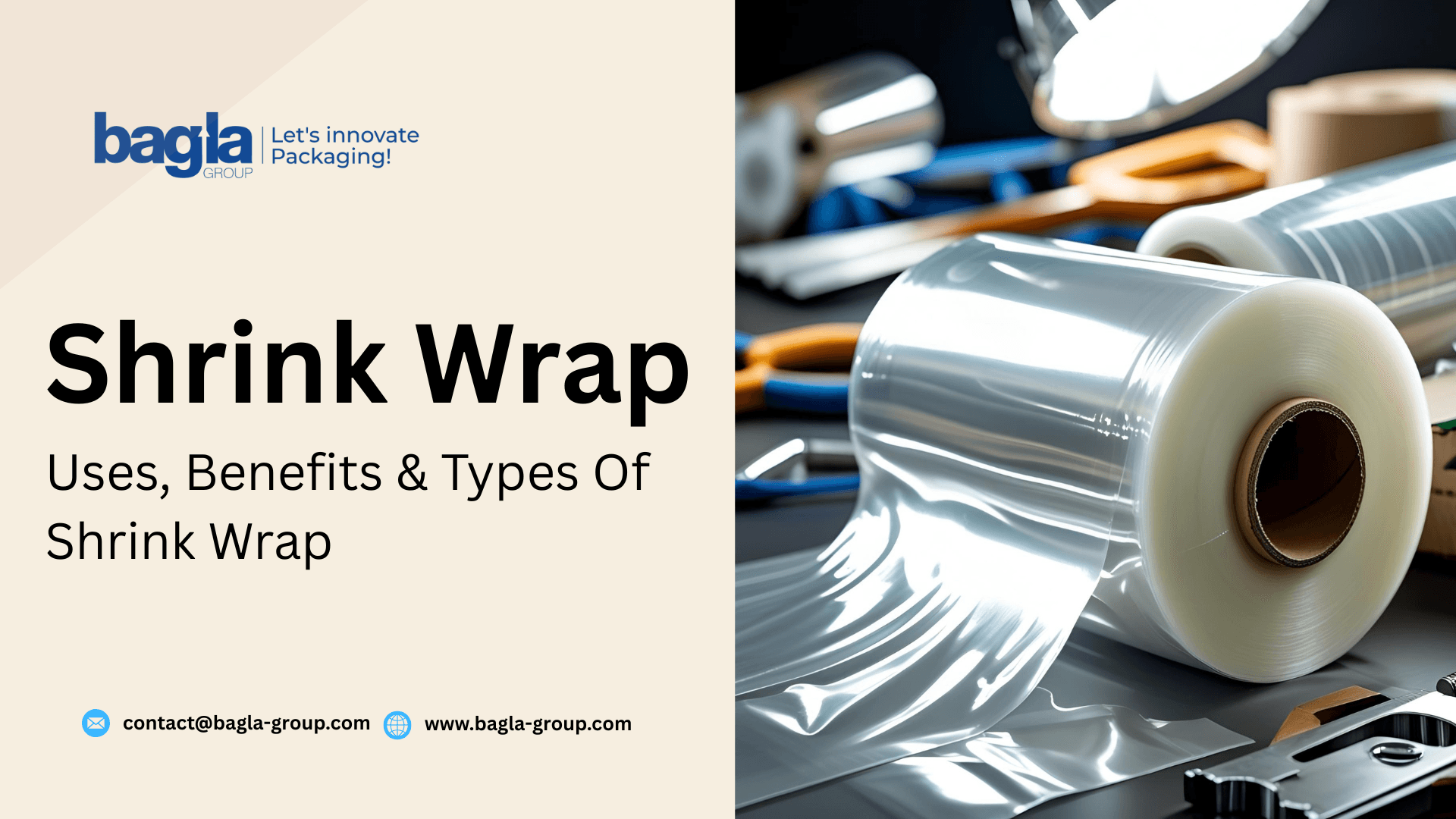
Shrink Wrap — you’ll also hear it called Shrink Film or heat shrink packaging — is a thermoplastic polymer film that contracts tightly around a product the moment heat is applied. It doesn’t fold, tape, or glue. It simply grips.
What makes it different from other packaging is that it uses the film’s own molecular structure to create a seal. The result? A package that fits the product like a second skin — no loose material flapping around, no air gaps, no messy edges. Just a clean, tight, professional finish.
Here’s the simplest way to think about it: Shrink Wrap grips and protects whatever is inside it, without needing adhesives or excess material.
How Does Shrink Wrap Work?
It’s a simple process once you see it — but getting each step right is what separates a clean finish from a botched one.
Step 1: Film Selection
Before anything else, you need the right film. That means choosing the correct type (POF, PVC, PE, or PP) and the right gauge — thickness, measured in microns. Get this wrong, and nothing else matters.
Step 2: Product Wrapping
The product goes inside the film using one of three methods:
- L-sealer + heat tunnel: the workhorse setup for high-speed automated lines in food, pharma, and retail.
- Sleeve wrapper: feeds the film around the product longitudinally; great for cylindrical items like bottles and cans.
- Manual sealing: slower but perfectly adequate for low volumes or oddly shaped items.
Step 3: Heat Application
The wrapped product passes through a heat tunnel (or gets a pass with a heat gun for manual work). Tunnel temperatures typically range from 120°C to 200°C (250°F–390°F), depending on your film type and thickness.
Don’t push the temperature too high. Most consumer films are designed for a maximum shrink range of 71°C to 176.5°C (160°F–350°F). Go beyond that, and you’re looking at burning, holes, or a distorted finish — none of which your customers want to see.
Step 4: Shrinkage and Cooling
This is where the magic happens. The film contracts tightly around the product in seconds. As it comes out of the heat tunnel, ambient air cools and sets the film — permanently locking in that protective shape.
Step 5: Quality Check
A quick inspection before dispatch: consistent shrinkage, clean seals, good clarity, tamper-evident. If something looks off, catch it here — not after it’s reached your customer.
Four Main Types Of Shrink Wraps
Here’s something we tell customers all the time: not all Shrink Films are the same, and picking the wrong one costs you more than just money. The wrong film type can mean poor shrinkage, compliance failures, rejected batches, or a cloudy finish that makes your product look cheap. Let’s break down the four main options.
1. POF (Polyolefin Shrink Film) — Most Versatile
If there’s one film worth knowing inside out, it’s POF. Polyolefin Shrink Film is the industry standard for retail and food packaging — and for good reason.
It’s made from a blend of polyethylene and polypropylene, which gives it a sweet spot of clarity, strength, and flexibility that the other films struggle to match.
Key -properties:
- FDA-approved and food-safe: no questions asked.
- High gloss and crystal clarity that show your product off beautifully.
- Strong tear resistance: if it gets a small nick, it won’t just run.
- Soft edges after sealing, so no sharp corners catch on hands or conveyor belts.
- No toxic fumes when heated: important for your team’s wellbeing.
- Available in cross-linked and non-cross-linked variants (more on cross-linked below).
2. PVC (Polyvinyl Chloride)
PVC was king for decades. It’s cheap, it’s widely available, and it still does a decent job in the right context. But it comes with some real limitations that are hard to ignore.
Key properties:
- The lowest material cost of the four.
- Good clarity.
- High rigidity — works well where you need a firm, crisp wrap.
- Not suitable for direct food contact — this is non-negotiable.
- Releases hydrochloric acid (HCl) fumes when heated — proper ventilation is essential, and it’s being phased out in many markets.
- Goes brittle at cold temperatures, which is a problem for cold-chain applications.
3. Polyethylene (PE) Shrink Film — Heavy-Duty
PE is the tough one. This is the film you reach for when the job is industrial rather than retail — when clarity doesn’t matter, and strength is everything.
Key properties:
- Exceptional puncture resistance.
- Available in very high gauges, up to 200 microns.
- Performs well at low temperatures — cold chain and outdoor storage aren’t a problem.
- Lower clarity — typically milky or semi-opaque (fine for industrial bundling, not great for retail).
- Needs higher tunnel temperatures to shrink properly.
4. Polypropylene (PP) Shrink Film
PP sits in an interesting middle ground, stronger than PVC, more temperature-resistant than POF, but with some quirks that mean it needs careful handling.
Key properti-es:
- High stiffness and strength.
- Good resistance to higher ambient temperatures during storage or transit.
- Requires a higher shrink temperature — not every heat tunnel can handle it.
- Good clarity, though less flexible than POF.
- Prone to tunnelling (uneven, baggy shrinkage) if temperature control isn’t tight.
Where Is Shrink Wrap Used?
Food and Beverage Packaging
This is the biggest application area — and honestly, POF Shrink Film was practically made for it.
Food manufacturers love it because it’s direct food-contact safe (FDA and EU compliant), completely odourless and flavour-neutral, and transparent enough that the product sells for itself. The barrier it creates against moisture, oxygen, and contaminants is genuinely impressive for such a lightweight material.
Retail and Consumer Goods
Retailers use Shrink Wrap for two reasons that reinforce each other: protection and presentation. A cleanly shrink-wrapped product on a shelf signals quality. It tells the customer that the product is untouched, fresh, and worth the price. That matters.
You know that satisfying crinkle when you pick up a shrink-wrapped product, and it’s completely tight? That’s POF doing its job — and it’s a genuine purchase signal.
Electronics and Technology
Electronics manufacturers deal with a specific set of challenges — static, moisture, and the need for a presentation finish that matches premium pricing. Shrink Wrap ticks all three boxes.
Shrink Wrap variants prevent electrostatic discharge (ESD) damage during transport, which can be a hidden killer for sensitive components. Standard POF keeps out humidity during shipping and storage. And the crystal clarity of POF means product graphics and branding are fully visible right through the packaging.
Advantages of Shrink Wrap Packaging
Here are the following advantages of using Shrink Wrap packaging:
1. Superior Product Protection
Shrink Wrap forms a continuous, seamless barrier. There are no seams to unpick, no gaps for moisture to creep through, no edges for dust to settle in. The film sits flush against the product and stays there.
It protects against:
- Moisture and humidity — preventing corrosion, mould, and spoilage.
- Dust and airborne contaminants.
- Physical impact and surface abrasion during transit.
- UV light, with UV-stabilised film grades.
Because the film conforms exactly to the product’s shape, there’s no excess packaging material to create pressure points or shift around during transport.
2. Tamper Evidence
Once applied correctly, Shrink Wrap cannot be removed and reapplied without leaving obvious evidence. You simply can’t fake an intact shrink-wrapped seal.
This matters enormously in pharmaceuticals, high-value retail, and food — anywhere a consumer needs to trust that the product they’re buying hasn’t been interfered with. A torn or punctured film is an immediate, visible signal.
3. Cost-Effective Packaging at Scale
Compared to rigid packaging — boxes, clamshells, blister packs — Shrink Film material costs are significantly lower per unit. And the savings compound:
- Lower material cost per SKU.
- Reduced packaging volume means lower shipping costs.
- Faster line speeds with automated L-sealers and heat tunnels.
- Less secondary packaging required overall.
For high-volume manufacturers, making the switch to Shrink Wrap from rigid packaging can cut per-unit packaging costs by 30–50%. That’s not a small number.
4. Professional Aesthetic and Brand Enhancement
There’s something about a properly shrink-wrapped product that just looks right. POF film’s optical clarity means product graphics and labels show through perfectly — colours appear true, the product looks sealed and fresh.
That “sealed and fresh” cue is a genuine purchase trigger, especially in food, cosmetics, and premium consumer goods. And if you want to go further, Shrink Film can be printed directly — turning the packaging itself into branded real estate.
5. Flexible — Fits Any Product Shape
Rigid packaging needs custom tooling for every product shape. Shrink Film doesn’t care. It handles irregular geometries, multipacks of non-uniform items, products with handles, spouts, or attachments — all on the same roll of film.
That flexibility cuts lead times and eliminates a lot of upfront capital expenditure, especially for businesses with diverse product ranges.
6. Environmentally Responsible Options
Sustainability is a real concern in packaging right now, and Shrink Film has come a long way. Modern POF options include:
- Reduced-gauge variants: same strength, 20–30% less material weight.
- Recyclable monomaterial films: compatible with PE recycling streams.
- Bio-based polymer options: partially or fully derived from renewable feedstocks.
At Bagla Group, we actively work with customers to find the thinnest gauge that still meets their performance requirements. Less material, same protection, better environmental footprint.
7. Shelf Life Extension for Food Products
When POF Shrink Film is combined with modified atmosphere packaging (MAP) or vacuum technology, perishable food shelf life extends significantly. That means less food waste at every point in the supply chain — from manufacturer to retailer to consumer. The economic and environmental case for this combination is compelling.
How to Choose the Right Shrink Film for Your Application?
We get asked this constantly. The honest answer is: it depends on a few key factors. Here’s the framework we use with customers.
Step 1: Define the regulatory requirements
Does the product need food-contact compliance? → POF, full stop. Is tamper evidence a regulatory requirement, as in pharma? → POF or cross-linked POF.
Step 2: Assess the product’s shape and weight
- Light, regular shapes → standard POF, 12–15 micron.
- Heavy or irregular → POF 19–25 micron, or PE.
- Industrial pallet loads → heavy-gauge PE.
Step 3: Consider your shrink equipment
POF works on most L-sealers and heat tunnels — it’s the most machine-friendly option. PVC needs lower tunnel temperatures. PE needs high-temperature, high-volume tunnels. PP needs the highest temperatures and the tightest temperature control.
Step 4: Think about the presentation
Retail display where clarity matters? → POF. Industrial bundling, where doesn’t it? → PE, and save your money.
Step 5: Calculate total cost of ownership
Don’t just look at the film price per kilogram. Factor in energy consumption (thinner films need less heat), waste rates, line speed, and how often you’re stopping to fix seal problems. POF’s combination of low waste rates and fast line speeds often makes it cheaper overall than cheaper-seeming alternatives.
Common Shrink Wrap Mistakes to Avoid
We’ve seen all of these, some more times than we’d like to admit.
- Using the wrong gauge: Too thin and you get tears and holes. Too thick and the film won’t shrink properly, leaving you with a wrinkled, unprofessional finish and wasted material.
- Incorrect tunnel temperature: Too hot and the film burns or discolours. Too cold and you get fish-eyes — those unshrunk areas that look terrible and compromise seal integrity.
- Wrong film for food contact: PVC in direct food-contact applications is a compliance failure waiting to happen. Always confirm FDA or relevant regulatory approval before committing to a film type.
- Ignoring shrink ratio: A film with a low shrink ratio simply won’t achieve a tight wrap on complex shapes. Always specify the shrink ratio alongside gauge when you’re sourcing film.
- Inconsistent sealing: Poor seals mean open packs, contamination risk, and failed tamper-evidence checks. Seal bar maintenance isn’t glamorous, but it matters.
Shrink Wrap vs. Stretch Wrap — What Is the Difference?
People mix these up all the time, so let’s clear it up.
| Shrink Wrap | Stretch Wrap | |
| Activation | Heat | Manual or mechanical tension |
| Result | Film contracts to product shape | Film stretches around the load |
| Primary use | Individual product or multipack sealing | Pallet unitisation |
| Material | POF, PVC, PE, PP | Linear low-density PE (LLDPE) |
| Clarity | High (POF/PVC) | Semi-transparent |
| Tamper evidence | Yes | No |
Short version: Shrink Wrap seals individual products; stretch wrap holds pallet loads together. Both have their place — just make sure you know which one you actually need.
Why Choose Bagla Group for Shrink Wrap Films?
Bagla Group is one of India’s leading manufacturers and suppliers of POF Shrink Films and specialty packaging materials. We’ve been in the packaging industry long enough to have seen most of the problems businesses run into — and to know how to help you avoid them.
We supply film to manufacturers, co-packers, and distributors across food, pharmaceutical, retail, and industrial sectors.
What sets us apart:
- FDA-compliant, food-grade POF Shrink Films.
- Wide range of gauges and widths to suit all machine types.
- Consistent optical clarity and shrink performance, batch after batch.
- Technical support for film selection, machine compatibility, and troubleshooting.
- Sustainable film options — reduced-gauge and recyclable grades.
- Serving customers in 50+ countries worldwide with dependable supply and consistent delivery.
Whether you’re building a new packaging line from scratch or optimising what you’ve already got, our team is here to help you find the right film for your product, your machine, and your budget.
Conclusion
Shrink Wrap is a lot more interesting than most people give it credit for. Done right, it protects products, extends shelf life, deters tampering, keeps costs in check, and makes your product look genuinely good on the shelf. Done wrong — wrong film, wrong temperature, wrong gauge — it creates headaches that cascade through your whole operation.
The key decisions: POF for food, retail, and pharma (it really is the best all-rounder). PE for heavy-duty industrial bundling. And if you’re still on PVC and wrapping anything food-adjacent, now’s a good time to have that conversation with your supplier.
Ready to find the right Shrink Film for your operation?
Reach out to Bagla Group’s packaging specialists for a consultation, a sample request, or a technical specification review. We’re happy to help.